

Body
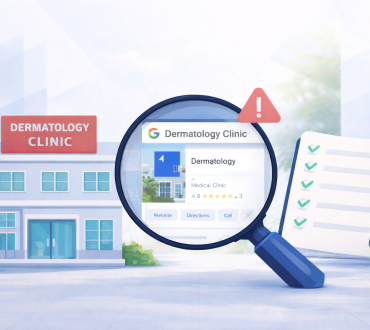
For many dermatology clinics, appearing on Google Maps is one of the most important sources of new patient inquiries. When someone searches for “dermatologist near me” or “skin clinic in [city],” Google Maps often displays just three local results-making competition extremely high.
If your clinic is not showing up consistently, it doesn’t necessarily mean your services are lacking. In most cases, the issue lies in how Google evaluates and displays local business profiles.
This article explains why dermatology clinics often struggle to rank on Google Maps and outlines what typically needs to be addressed, without making claims or promises.
How Google Decides Which Dermatology Clinics Appear on Maps
Google primarily evaluates local businesses using three broad factors:
- Relevance – How well your profile matches the search intent
- Distance – How close your clinic is to the searcher
- Prominence – How established and trusted your clinic appears online
For dermatology clinics, these factors are influenced by several profile-level and behavioral signals.
Common Reasons Dermatology Clinics Don’t Rank on Google Maps
1. Incomplete or Improperly Optimized Google Business Profile
Many clinics create a profile but leave key sections incomplete. Missing or inaccurate information-such as services, categories, photos, or business descriptions-can limit how Google understands your practice.
Dermatology is a specialized field, and generic or incorrect categorization can reduce relevance for specific treatment-related searches.
2. Category Mismatch or Over-Optimization
Selecting the wrong primary category or adding unnecessary secondary categories can confuse Google’s algorithm. Some clinics attempt to include too many keywords or services, which may dilute relevance rather than improve it.
Google tends to favor clarity and consistency over excessive optimization.
3. Low Review Activity or Review Fatigue
Reviews play a significant role in local visibility, but it’s not only about having a high rating.
Common challenges include:
- Long gaps between new reviews
- Reviews lacking context about treatments
- Limited engagement through review replies
When review activity slows down, it can affect how active and relevant a profile appears.
4. Strong Local Competition
In many cities, dermatology clinics operate in highly competitive areas. Clinics with:
- Longer operating history
- Higher brand recognition
- Consistent online mentions
may naturally appear more prominent, even if your clinic offers similar or better services.
5. Limited or Outdated Visual Content
Google Maps favors profiles that help users visually understand a clinic. Profiles with outdated, low-quality, or minimal photos may struggle to stand out.
For dermatology clinics, visual trust signals-such as clinic interiors, equipment, and professionally presented imagery-can influence engagement.
6. Inconsistent Business Information Across Platforms
If your clinic’s name, address, or phone number differs across websites, directories, or social platforms, Google may find it difficult to confidently rank your profile.
Even small inconsistencies can reduce trust signals over time.
7. Lack of Ongoing Profile Activity
Google Business Profiles are not “set-and-forget” assets. Clinics that rarely update posts, services, or images may appear inactive, especially compared to competitors who maintain regular engagement.
How These Issues Are Typically Addressed
Improving Google Maps visibility for a dermatology clinic usually involves:
- Reviewing profile structure and categories
- Evaluating review trends and engagement
- Assessing competition within the local area
- Ensuring consistency across digital platforms
- Maintaining regular profile updates
These steps often require periodic audits and careful adjustments, rather than one-time changes.
Final Thoughts
Not ranking on Google Maps does not reflect the quality of care your dermatology clinic provides. In most cases, it indicates technical, structural, or consistency-related gaps within the online presence.
Understanding these factors is the first step toward improving visibility in local search-without relying on shortcuts or unrealistic expectations.